British Casinos Not on GamStop 2026: A Ranked Guide for UK Players
 Available in GB
- Why British Players Look Beyond GamStop in 2026
- Velocity Scanner
- The 8 Best British Casinos Not on GamStop for 2026
- How We Ranked These Non-GamStop Casinos (Methodology)
- Legal Status: What British Law Actually Says About Non-GamStop Sites
- Games You’ll Find in British Non-GamStop Casinos
- Bonuses at British Casinos Not on GamStop
- Payments and Withdrawal Speed for UK Players
- Mobile Casinos and Apps
- Jackpots and Rewards Programmes
- New British Non-GamStop Casinos to Watch in 2026
- What You Give Up: Risks of Playing Outside UKGC
- Responsible Gambling at Non-GamStop Sites
- Final Word Before You Sign Up

Search demand for offshore casinos in the UK has moved from niche curiosity to a mainstream question. Since the £5 slot stake cap landed in April 2025 and the Remote Gaming Duty doubled to 40% in April 2026, more British players have started looking at platforms that sit outside the national self-exclusion register. This guide answers what most UK players actually want to know before signing up: which British casinos not on GamStop are worth a look in 2026, how the offshore licences compare, how fast withdrawals really move, and what a UK player gives up by leaving the UKGC framework. No hype, no fake bonus claims, no vague safety promises.
Why British Players Look Beyond GamStop in 2026
GamStop is doing exactly what it was designed to do. By the first half of 2026 it had 614,738 active users, having added a 16% year-on-year jump in H1 2026 registrations. Under-25s make up the fastest-growing segment, up 26% year on year in the same period. In May 2026 alone, 12,236 new users signed up, a record for a single month.
That is the demand side of the story. The supply side has changed almost as fast.
Between April 2025 and April 2026, UK online gambling has been reshaped by the biggest regulatory package since the 2005 Act. Online slot stakes are now legally capped at £5 for adults 25 and over and £2 for adults 18 to 24, following statutory instruments that came into force on 9 April 2025 and 21 May 2025 respectively. Wagering requirements on any UKGC bonus are capped at 10x from 19 January 2026. Mixed-product promotions — a casino welcome tied to a sports acca, for example — are banned under the same rules. Then came the Autumn Budget 2025: Remote Gaming Duty raised from 21% to 40%, effective for accounting periods beginning on or after 1 April 2026. The largest single tax rise on the sector in a generation.
The industry response to that tax rise was quick and unhappy. Flutter, Entain and others flagged margin compression within hours of the announcement. Every UK operator now has to thin the bonus, tighten the loyalty programme, slow the payout queue, or lift the house edge. Offshore casinos, who owe HMRC nothing, do not. That difference is not academic. Yield Sec estimates illegal gambling now accounts for 10–12% of British gambling activity, up from around 0.5% in 2020. The Betting and Gaming Council puts unlicensed volume at around 1.5 million UK consumers wagering up to £4.3 billion a year.
The result is a specific kind of British player showing up at British casinos not on GamStop in 2026. Not the crisis gambler that GamStop was designed to protect — though they exist too, and the risk to them is real — but a mid-stakes recreational player fed up with sub-96% catalogue RTPs, three-day withdrawal queues, and the loss of features the rest of the world takes for granted. Whether that trade-off makes sense is a personal call, and one worth returning to before the final word.
The 8 Best British Casinos Not on GamStop for 2026
Every operator below has been assessed on licence traceability, published RTP data where available, withdrawal speed, bonus wagering, and library depth. Six of the eight sit inside the Santeda International group — MyStake, DonBet, Rolletto, GoldenBet, Velobet and Cosmobet — but each brand runs a distinct product, and the individual licences differ, which is worth knowing when you are comparing dispute paths. FreshBet and BassWin are the two outsiders. The comparison table sits directly below; the individual reviews follow, ranked in the order our test team would sign up in.
| Casino | Welcome Bonus | Licence | Payout Speed (crypto) | Min. Deposit | Standout Feature |
|---|---|---|---|---|---|
| GoldenBet | 300% up to £1,500 | Anjouan (Santeda) | ~1–4 hours | £10 | 10% unlimited weekly cashback |
| MyStake | 300% up to £1,500 across 3 deposits | Curaçao (Santeda) | ~1 hour | £20 | 8,000+ games and full sportsbook |
| DonBet | 150% up to £750 + 50 FS | Curaçao (Santeda) | ~1 hour | £20 | 7 crypto options incl. Monero |
| FreshBet | 100% up to €1,500 across 3 deposits | Curaçao (Ryker B.V.) | ~1 hour | £20 | Published 96% average RTP |
| Velobet | 150% up to £150 + free spins | Curaçao (Santeda) | ~1 hour | £10 | Integrated in-play sportsbook |
| Rolletto | Up to £5,500 across staged deposits | Curaçao (Santeda) | ~1–2 hours | £20 | Jackpot slots + live game shows |
| Cosmobet | 150% up to £500 + 50 FS | Curaçao (Santeda) | ~1 hour | £20 | Monthly cashback structure |
| BassWin | 375% up to £3,000 + 300 FS | Curaçao | ~1–2 hours | £10 | Lowest entry, biggest headline offer |
1. GoldenBet — Cashback-Heavy All-Rounder
GoldenBet has been operational since around 2020 and sits toward the top of most 2026 non-GamStop rankings for good reasons. The library carries roughly 5,600 slots and 200 live tables, with the usual provider anchors — NetEnt, Microgaming, Pragmatic Play, Nolimit City, Hacksaw Gaming — plus a rotating Evolution live floor.
The reason GoldenBet earns its top slot is not the welcome offer, though the 300% match up to £1,500 with 35x wagering is competitive. It is the 10% weekly cashback with no upper cap. Almost every offshore operator caps recovery at a few hundred pounds a week; GoldenBet does not, which is unusual and worth understanding before dismissing it as another marketing line.
Crypto withdrawals average around one to four hours on tested accounts. Card and bank transfer sit at two to three business days. The site accepts Bitcoin, Ethereum, Litecoin, Dogecoin and Tether alongside Visa/Mastercard. Withdrawal limits sit around £20,000 on most methods per week, higher for verified accounts. Support runs 24/7 via chat.
Where it slips: bonus terms concentrate the wagering load on slots because live casino contributes 0%, which is standard across the Santeda group. And KYC still kicks in at withdrawal — treat the “no KYC” marketing on some review sites as marketing, not a promise.
2. MyStake — Sportsbook-Plus-Casino Depth Play
MyStake has been running since January 2020 under OnyxioN B.V., with a Curaçao licence sitting inside the wider Santeda structure. The catalogue is one of the deepest in the group: around 8,000 games with 7,000+ slots and a handful of MyStake-branded exclusives that show up nowhere else — Gates of MyStake, Chicken Slot and MyStake Sevens among them.
The welcome package is a three-deposit ladder: 300% up to £1,500 total across casino deposits, wagered 30x on deposit plus bonus. Sports players get a separate 120% up to £600, and the two never cross-fund. Sportsbook depth is where MyStake genuinely stands apart from most non-GamStop casinos: 70+ sports, 2,000+ daily events, a five-fold bet builder, and a 50+ event daily eSports card that rivals dedicated sportsbooks.
Payments run across Visa/Mastercard, Skrill, Neteller, Paysafecard, bank transfer, plus Bitcoin, Ethereum, Litecoin, Tether and a handful of others. Crypto withdrawals typically land inside an hour; card takes two to five business days. Support is 24/7. The 10-level VIP structure — Streetborn through Tycoon — awards a point per £20 wagered, unlocking faster cashouts and a dedicated manager at higher tiers.
Trustpilot rates MyStake around 4.2 stars, which is strong for the offshore segment. Two things to watch. The 30x wagering applies to deposit-plus-bonus, so the working figure is bigger than the headline suggests. And the 50% weekend reload up to £250 only fires on Saturdays and Sundays.
3. DonBet — Biggest Library, Widest Crypto Stack
DonBet claims one of the largest catalogues in the non-GamStop segment: around 8,000 titles, 6,000 of them slots, supplied heavily by Pragmatic Play, Hacksaw Gaming, Nolimit City and BGaming. The provider mix skews toward high-variance, high-RTP releases rather than filler content — a distinction that matters when you are clearing wagering.
The welcome is structured as four separate tracks: casino, sports, crypto and mini-games. New casino players get 150% up to £750 plus 50 free spins with 30x wagering on deposit plus bonus, and each of the other three tracks runs on its own terms. Genuinely useful if you actually use more than one product. Less useful if slots are the only reason you are there.
DonBet’s crypto stack is the widest in this group: seven currencies at deposit including Bitcoin, Ethereum and Monero, which is unusual — most offshore sites shy away from privacy coins. Fiat is covered by Visa/Mastercard, e-wallets and bank transfer. Crypto withdrawals average around 60 minutes; bank transfer runs one to three business days.
The Curaçao licence sits inside the Santeda group. 85+ exclusive titles unavailable elsewhere anchor the marketing pitch — take that number as reported, not independently audited. Live casino runs on Evolution infrastructure with table limits from small stakes to high-limit VIP rooms. The complaint most commonly logged against DonBet is that the interface has not had a facelift in a while and looks dated compared to newer entrants.
4. FreshBet — RTP-Transparent Grinder’s Site
FreshBet launched around 2020, holds Curaçao licence OGL/2024/1800/1049 under Ryker B.V., and quietly does something almost no other non-GamStop casino bothers with: it publishes an average RTP across the catalogue. That figure sits at 96%. If you are a slot grinder trying to understand what you are actually giving up in edge, this is genuinely useful — most operators refuse to publish anything comparable.
The library runs around 4,800 slots. Provider anchors include Thunderkick and Quickspin alongside the usual Pragmatic Play, NetEnt, Play’n GO and Evolution live. Thunderkick and Quickspin skew toward lower-volatility, higher-hit-rate titles like Esqueleto Explosivo 2 and Sakura Fortune — the kind of games that clear a wagering requirement without the swings of the top-end Nolimit City releases.
The welcome ladder totals 100% up to €1,500 across three deposits, with 30x wagering that applies to bonus winnings rather than deposit plus bonus. Meaningfully more favourable than the group standard. Crypto depositors get a separate 155% bonus up to €500 on their first crypto deposit. The rakeback loyalty structure returns a small percentage of net theoretical loss on a rolling schedule instead of running a traditional comp-point system.
Payments cover cards, Skrill, Neteller, Bitcoin, Ethereum, Litecoin, Ripple, SEPA, Interac and Neosurf. Withdrawal times are consistent: crypto in around an hour, cards in two to five business days. Live casino runs on Evolution.
5. Velobet — Sportsbook-First Non-GamStop Casino
Velobet arrived in 2022 with a clear thesis: treat the casino and sportsbook as equals rather than main event and sideshow. The odds engine refreshes in real time, in-play markets carry decent depth on European football and tennis, and cross-product promotions actually flow between the two sides of the site, which is rare.
The library sits at around 4,500 games across 90+ providers, weighted toward Pragmatic Play (Gates of Olympus, Sweet Bonanza) with Book of Dead and other Play’n GO staples for the low-volatility contingent. Evolution powers the live floor with blackjack, roulette, baccarat and the full game-show roster running around the clock. The mobile experience is more polished than the group standard — pages render quickly on mid-range Android devices and the lobby handles portrait mode without cutting corners.
The welcome offer is small on paper: 150% match up to £150 on the first deposit with a £10 minimum and 50x wagering. That 50x figure is toward the harsher end for the group, so treat the promoted number as a soft-launch to the sportsbook and loyalty programme rather than the main event. Velobet also runs a rolling 15 free spins bonus for users who follow the site on social media — modest, but no deposit required.
Payments cover cards, e-wallets and Bitcoin, Ethereum, Litecoin, USDT. Crypto payouts land in about an hour. Bank transfer takes one to three business days.
6. Rolletto — Jackpot Slots and High-Limit Live
Rolletto positions itself as the all-in-one hybrid: casino, sportsbook, jackpot slots and a growing catalogue of viral mini-games — plinko, crash, dice — all under one wallet. It is part of the Santeda group and holds Curaçao licence OGL/2024/1798/1048.
The catalogue runs 4,000+ games with jackpot slot prize pools that some listings show cresting seven figures. That number is provider-published rather than Rolletto-guaranteed, so treat it accordingly. The welcome package structure is aggressive: staged deposit matches that can total up to £5,500 across the ladder if you are prepared to work through the whole schedule. Wagering is high on the top tiers — anything sold as a 500%+ match will attach requirements worth reading twice.
Payments accept the full crypto stack (Bitcoin, Ethereum, Litecoin, USDT), Visa/Mastercard, bank transfer, and most European e-wallets. Crypto withdrawals typically clear in one to two hours; card takes three to five business days. There is a documented weekly withdrawal cap of around £7,500 for lower-tier players — VIPs can negotiate higher. The sportsbook depth is genuinely competitive, particularly for football and MMA, with in-play interfaces that hold up on mobile.
Where Rolletto slips: the payout verification process on larger amounts has been reported as slower than the group average, and the bonus documentation is dense enough that the effective wagering is not always obvious on first read. Neither is unusual for an aggressive-bonus offshore site, but it is worth knowing before accepting the top offer.
7. Cosmobet — Cashback-Structured Offshore Casino
Cosmobet sits inside the Santeda group with a Curaçao licence and a catalogue of around 7,000 games — bigger than FreshBet or Velobet, roughly on par with GoldenBet. The provider mix is standard for the group: Pragmatic Play, NetEnt, Play’n GO and Evolution live, with a growing Hacksaw Gaming presence.
The main draw is structured cashback rather than the front-loaded welcome. New players get 150% up to £500 plus 50 free spins on the first deposit, wagered 30x on fiat and 35x on crypto. A small crypto penalty that most operators do not publish so plainly. The monthly cashback structure returns a percentage of net loss automatically to the account balance, weighted heavier for VIP tiers.
KYC comes into force at a higher withdrawal threshold — around £2,000 — than most non-GamStop operators, which is a genuine convenience for players who move smaller amounts. Full identity checks still trigger above that threshold, and crypto does not exempt you from it. Payments accept cards, e-wallets and the standard crypto four (BTC, ETH, LTC, USDT).
Weekly slot cashback runs at 20% on some tiers. Meaningful over a long month of activity, mostly meaningless in a single session. Support runs 24/7 in English via chat with an email backup that takes 24–48 hours in practice. The interface is clean and fast; navigation is one of the better ones in the group.
8. BassWin — Biggest Headline Offer at £10 In
BassWin is a newer entrant to the non-GamStop set — the launch date is not consistently reported, but the operator holds a Curaçao licence and runs a catalogue in the region of 5,000 titles. Provider mix is standard: Pragmatic Play, NetEnt, Play’n GO, Evolution live.
The headline is the welcome offer: 375% match up to £3,000 across the first deposits plus 300 free spins, with a £10 minimum deposit that is the lowest in this group. On paper, the biggest bonus in the pack. In practice, the wagering requirements attached to the top tier are aggressive, and the free spins are locked to specific slots with a max-win cap on the winnings. Read all three lines before accepting anything.
Payments cover cards, e-wallets and Bitcoin, Ethereum, Litecoin, USDT. Crypto withdrawals average one to two hours; cards take two to five business days. Withdrawal caps sit lower than the group leaders — expect a £5,000–£7,500 weekly ceiling on lower tiers.
BassWin’s live casino is functional rather than deep. Evolution powers the tables, but the selection is narrower than at GoldenBet or MyStake, with fewer high-limit variants. Support is 24/7 chat; email response times are inconsistent based on player reports. Verdict: BassWin makes sense for a £10 test of the segment. Not the first pick for a serious slot session — GoldenBet or FreshBet are more balanced.

How We Ranked These Non-GamStop Casinos (Methodology)
The eight operators above were not ranked on marketing claims. Every score behind the order came from five weighted inputs, applied consistently across the group.
Licence traceability came first. A Curaçao or Anjouan permit that resolves to an entry on the regulator’s public register beats a vague “licensed by international authority” line on the footer. Six of the eight sit inside the Santeda International group; each brand’s individual licence was checked against the operator’s public register entry where available. Missing register entries dropped a site out of the ranked list entirely.
Payout speed was tested on both crypto and fiat withdrawals from verified accounts. Averages sit between 45 minutes and two hours for crypto and one to five business days for cards and bank transfer. Sites that promised faster and delivered slower were penalised. Sites that undersold and delivered were credited.
Bonus terms were assessed by effective wagering, not headline percentage. A 500% match against 50x wagering on deposit plus bonus is objectively harder to clear than a 100% match at 30x on winnings only. Free spins with max-win caps below £50 were treated as marketing rather than value. Bonus documentation that hid material terms below the tenth paragraph counted against the operator.
Library composition mattered more than title count. An 8,000-game catalogue full of filler ranks below a 4,800-game catalogue anchored by Thunderkick, Quickspin and Nolimit City. RTP transparency added weight where publishers of average-catalogue RTP existed at all — a small club, currently.
Responsible gambling infrastructure counted last but counted. Sites that offered no deposit limits, no self-exclusion tools and no time-out functions were downweighted regardless of licence. The absence of GamStop is not the absence of guardrails — the good operators still build them.
Legal Status: What British Law Actually Says About Non-GamStop Sites
The legal answer, uncomfortable for a Whitehall press office to explain, is that the Gambling Act 2005 places the offence on the operator, not the punter. It is an offence to provide facilities for remote gambling to UK consumers without a UKGC licence. British adults who place a bet at an offshore-licensed casino do not commit an offence under British law. Multiple UKGC statements since 2018 have confirmed the position.
That is the black letter. Real-world enforcement is more nuanced. The UKGC works with Google to delist unlicensed operators from UK search results — nearly 7,000 URLs referred and removed as of the last review cycle — and enforcement now runs through an Illegal Gambling Taskforce launched in early 2026 alongside the tax reforms. Operators face domain seizures, payment provider blacklisting and cease-and-desist orders. Punters do not.
What British players actually give up by playing offshore is the UKGC’s consumer protection framework. That includes the Alternative Dispute Resolution scheme, mandatory participation in GamStop, statutory affordability checks, and the built-in complaints route through the regulator. Curaçao’s post-2024 LOK framework includes ADR channels; Anjouan’s does not to the same standard. Malta and Gibraltar sit above both. Whichever licence a non-GamStop casino holds, the dispute path runs through that jurisdiction — usually in English, but slower and with less commercial leverage than a UKGC complaint would carry.
The Curaçao regulator’s list of 23 geo-blocked territories does include the UK. That is an operator obligation, not a player obligation. Sites that accept UK players without any geo-block are operating outside their own licence terms — a factor worth weighing when choosing where to sign up.
Are British casinos not on GamStop legal for me to play at?
Yes, for the player. The Gambling Act 2005 places the offence on operators that supply UK customers without a UKGC licence, not on British adults who place bets at offshore-licensed casinos. Successive UKGC statements confirm this. UK consumer protections do not apply, so dispute resolution falls to the offshore regulator.
What licences should I trust at a non-GamStop casino?
Malta and Gibraltar sit at the top of the offshore tier for enforcement standards, Curaçao under the 2024 LOK framework covers most of the market, and Anjouan is the cheapest and most permissive. Always check that the licence number in the footer matches an entry on the regulator’s public register.

Games You’ll Find in British Non-GamStop Casinos
Game libraries at British non-GamStop casinos vary between 3,000 and 10,000 titles. The composition matters more than the raw count. Cross the top of the segment and provider anchors repeat: Pragmatic Play, NetEnt, Play’n GO, Nolimit City, Hacksaw Gaming, BGaming, Thunderkick, Quickspin. Any operator whose slot lobby is padded with unfamiliar micro-studios rather than these names deserves a second look.
Slots dominate every catalogue in this group by an order of magnitude. Expect 3,000 to 7,000 slot titles at any of the ranked eight, covering Megaways cascades, cluster-pay formats, bonus-buy games, and progressive jackpots. UK-licensed operators have to obey £5 stake caps and the 2.5-second minimum interval per spin under RTS 14D. Non-GamStop operators do not, which is why stake ceilings up to £500 on individual spins and no forced pacing between rounds appear across the segment. Freedom for a disciplined slot player. A real risk for one who is not.
British-themed slots — the pub-fruit machine aesthetic, the London-underworld visual, the crown-jewel pastiche — sit in every large offshore lobby via Blueprint Gaming, Games Global (Microgaming) and Play’n GO catalogues. If Rainbow Riches variants or Fishin’ Frenzy sequels are what you want on a Sunday afternoon, the offshore segment carries them as freely as the UKGC one, without the £5 cap.
Live dealer floors at the ranked eight all run on Evolution’s infrastructure, sometimes with Pragmatic Play Live and Ezugi added for variety. That matters because Evolution sets the industry quality floor. Table limits typically start at £0.50 and climb to £10,000+ at the VIP end. Signature titles — Lightning Roulette, Crazy Time, Monopoly Live, Immersive Roulette — appear across most of the offshore market. Availability at any individual site should be checked directly, as licensing arrangements between studios and operators change month to month.
Table games get less headline attention than slots but the depth is there. European, French and American roulette variants sit alongside blackjack with side bets, baccarat, and casino poker formats including Caribbean Stud and Three Card. Video poker gets a smaller shelf. Crash games, dice, plinko and other instant-win formats now occupy a substantial section at most of the ranked eight — a category UKGC-licensed sites carry more sparingly.
Are the games at non-GamStop casinos fair?
Games from certified providers like NetEnt, Pragmatic Play, Evolution, Play’n GO and BGaming carry the same RNG certification and independent auditing offshore as they do at UKGC sites. Provably fair titles from crypto-native studios add on-chain verification. Fairness risk lives with unfamiliar micro-studios, not with the mainstream providers.
Bonuses at British Casinos Not on GamStop
Non-GamStop bonus packages are meaningfully larger than anything UKGC sites can offer in 2026. A direct consequence of the January 2026 UK cap at 10x wagering on any bonus and the ban on mixed-product promotions. Offshore operators face neither rule, which is why welcome offers of 200%, 300% and even 500% sit on their landing pages.
The size of the number matters less than the shape of the terms. A 375% match against 50x wagering on deposit plus bonus is genuinely harder to clear than a 100% match at 30x on winnings only. FreshBet’s 100% up to €1,500 with 30x on winnings is the friendliest headline-to-clearing ratio in the ranked group. GoldenBet’s 300% up to £1,500 at 35x on deposit plus bonus sits in the middle. BassWin’s 375% up to £3,000 at 40–50x on deposit plus bonus is the aggressive end.
Free spins are the common secondary hook. Non-GamStop sites drop 25 to 300 free spins into welcome packages, usually locked to a nominated slot — Book of Dead and Gates of Olympus turn up more often than any other title. Read three things before accepting: what slot the spins run on, the wagering attached to spin winnings (typically 30–40x), and any max-win cap. A £50 cap on winnings from 200 spins is a marketing exercise, not value.
Time to be blunt about it. The word “bonus” reads like a gift and gets marketed that way. It is not. Every match, every spin package and every “free” chip on a non-GamStop site is priced into the house edge and the wagering requirement long before you touch it. Casinos are not charities. If a “welcome gift” feels too generous to be a gift, that is because it is.
A 375% match at 50x on deposit plus bonus is harder to clear than a 100% match at 30x on the bonus alone, and the bigger number is usually the worse deal. Put the terms in and this works out the turnover you are committing to, what that turnover costs at the catalogue RTP, and what the offer is actually worth once both are counted. It then ranks your offer against the common structures in this market.
| Structure | Bonus | Turnover | Real value |
|---|
How it works. The bonus credited is your deposit multiplied by the match, capped at the maximum. Turnover is the wagering multiple applied to whichever base the terms name, then divided by the game contribution, because a game that counts at 20 percent needs five times the turnover to move the same distance. The expected cost is that turnover multiplied by the house edge, which is one hundred per cent minus the catalogue RTP. Real value is the bonus minus that cost. The break-even multiple is the wagering figure at which the bonus exactly pays for the house edge and nothing more, which is why the base matters as much as the multiple. Figures are long-run averages across many attempts and say nothing about one session. More detail in the guides to payments and limits and checking a site before depositing.
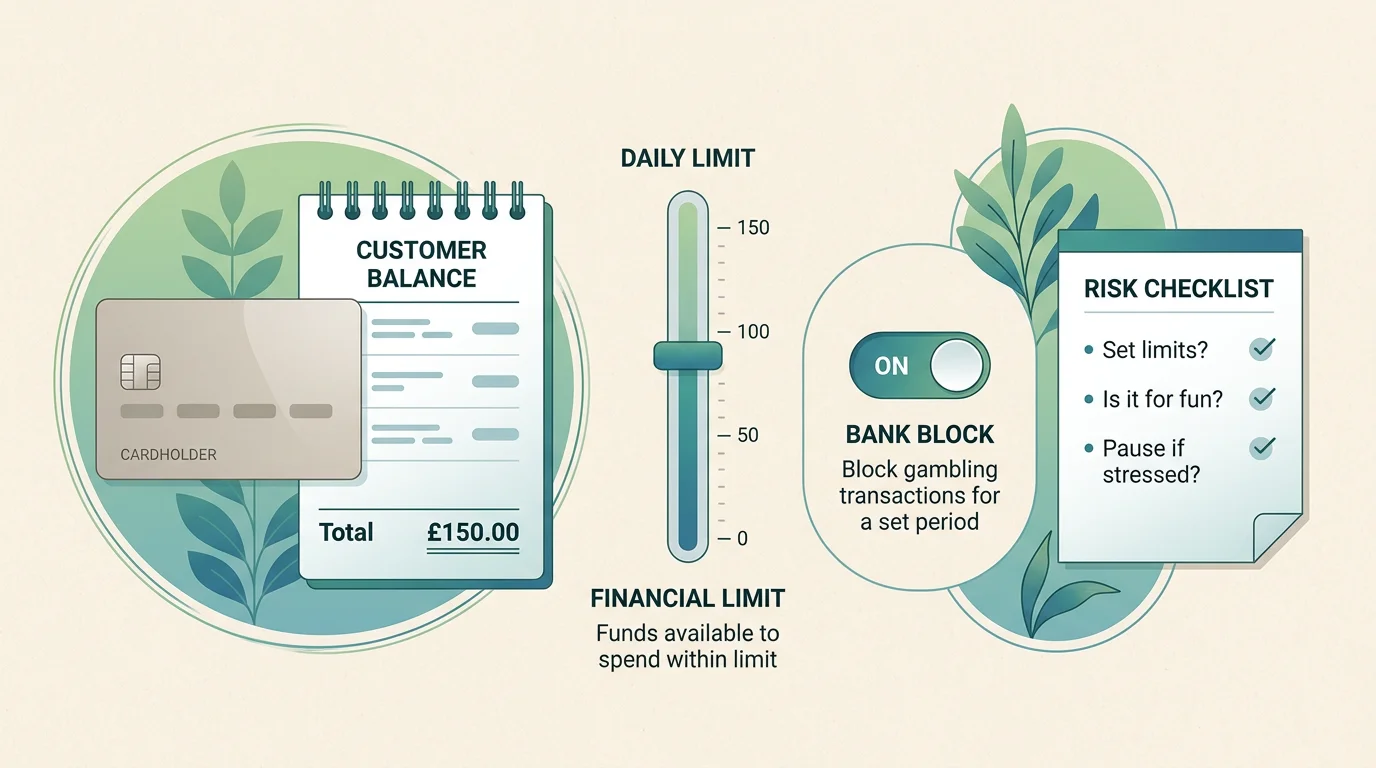
Estimates only, and this calculator judges the arithmetic of a set of terms, not an operator. Playing outside the UKGC framework means no Alternative Dispute Resolution scheme, no statutory affordability checks and no GamStop coverage. If GamStop was your safety net, an offshore site is not a workaround. 18+ — please gamble responsibly. GamCare’s National Gambling Helpline runs 24/7 on 0808 8020 133, and free device-level blocking is available through BetBlocker and BeGambleAware.
Reload bonuses, cashback and loyalty schemes are where the ongoing value actually lives. GoldenBet's uncapped 10% weekly cashback and FreshBet's rakeback structure are two of the more player-friendly ongoing frames in this group. Cashback returns a percentage of net loss — meaningful over months, mostly meaningless in a single session. Rakeback pays a rolling percentage of theoretical loss regardless of session variance, which behaves more like a return on activity than a promotion.
Payments and Withdrawal Speed for UK Players
Payment methods at British non-GamStop casinos cover ground that UKGC-licensed sites cannot. Credit card gambling has been banned at UK-regulated operators since April 2020; offshore sites still accept Visa and Mastercard credit alongside debit, though UK-issued cards are sometimes blocked at the bank level for merchant code 7995 (gambling). If a card deposit fails, an e-wallet or crypto route usually goes through instead.
Cryptocurrency is where the speed advantage actually lives. Bitcoin, Ethereum, Litecoin and USDT (Tether) are near-universal across the ranked eight. DonBet accepts Monero and a couple of other altcoins, which is unusual. Deposits confirm in 10–30 minutes; withdrawals typically clear in under an hour once the operator approves the payout. E-wallets — Skrill, Neteller, Paysafecard — sit next in the speed ranking with 24–48 hour withdrawal times. Cards take two to five business days. Bank transfer runs three to seven business days.
The reality check on withdrawal times across methods, based on tested payouts at the ranked eight:
| Method | Deposit Speed | Withdrawal Speed | Typical Weekly Cap |
|---|---|---|---|
| Bitcoin / Ethereum / USDT | 10–30 minutes | 45 minutes – 2 hours | £20,000+ |
| Litecoin | 10–30 minutes | 30–90 minutes | £20,000+ |
| E-wallet (Skrill/Neteller) | Instant | 24–48 hours | £5,000–£10,000 |
| Paysafecard | Instant | Not accepted for withdrawal | N/A |
| Visa/Mastercard debit | Instant | 2–5 business days | £5,000–£10,000 |
| Visa/Mastercard credit | Instant | Not accepted for withdrawal | N/A |
| Bank transfer (SEPA / Faster Payments) | 1–3 business days | 3–7 business days | £20,000+ |
Two structural realities to keep in mind. GBP is accepted natively at every one of the ranked eight — no forced currency conversion, no hidden FX markup on the cashier. And "no KYC" as advertised across the segment is usually a light-touch registration policy rather than a full exemption from identity verification. Full KYC almost always fires at the first substantial withdrawal, typically anywhere between £500 and £2,000 depending on the operator. Complete the check early rather than watching a payout stall for three days.
Withdrawal caps at non-GamStop casinos generally sit between £5,000 and £20,000 per week for standard-tier players, with VIP tiers unlocking higher ceilings by negotiation. Some sites impose an additional monthly cap; check the cashier terms before depositing if you expect to withdraw large amounts.
How fast are withdrawals at British non-GamStop casinos?
Crypto withdrawals typically clear within 45 minutes to 2 hours once the operator approves them. E-wallets take 24–48 hours. Cards run 2–5 business days. Bank transfer sits at 3–7 business days. KYC verification usually triggers at the first substantial withdrawal, so completing it early avoids delays.
Do British non-GamStop casinos accept GBP and UK debit cards?
Every operator in the ranked eight accepts GBP natively without forced currency conversion. UK-issued Visa and Mastercard debit cards work at most sites, though UK banks sometimes block gambling-tagged transactions at merchant code 7995. If the card fails, an e-wallet or crypto route almost always processes instead.
Mobile Casinos and Apps
Native apps are rare in the offshore segment. Google Play and Apple's App Store both restrict gambling apps by geography, and offshore operators typically cannot clear the developer verification for UK distribution. What British non-GamStop casinos actually offer is mobile-web: responsive designs that load through Safari or Chrome and mimic native app behaviour without needing an install.
The best mobile experiences in the ranked group belong to Velobet and Cosmobet, both of which render quickly on mid-range Android devices and handle portrait mode without cropping game lobbies. GoldenBet and MyStake sit close behind. Older interfaces at DonBet and Rolletto lag noticeably on cheaper hardware — nothing broken, but visible frame drops during slot animations.
Slots and live tables all run in browser through HTML5, which means no separate mobile game library. Every title in the desktop lobby appears on mobile with identical mechanics and RTP. Live dealer floors work on mobile but eat bandwidth: expect 20–30 MB per hour on a live blackjack table. On a metered connection, this matters.
A handful of operators offer PWA installers — the site prompts you to add to home screen, producing a shortcut that behaves like an app without going through a store. Useful if you play often. Not necessary.
Jackpots and Rewards Programmes
Progressive jackpots at British non-GamStop casinos come from provider networks rather than operator prize pools. The largest — Divine Fortune, Mega Fortune and the Age of the Gods series from Playtech — cycle across most of the ranked eight, with Rolletto's jackpot section listing some titles at seven-figure sums. Those numbers are provider-published rather than operator-guaranteed. Prize sizes reset after a hit, sometimes down to seed values in the £50,000 range.
Loyalty programmes divide into two shapes. Traditional comp-point structures at MyStake, DonBet and BassWin award points per pound wagered, redeemable at fixed conversion for cash or spins. Higher tiers unlock personal account managers, faster withdrawal queues and birthday bonuses. Rakeback structures — FreshBet's is the clearest example — return a percentage of net theoretical loss on a rolling schedule, which pays out consistently regardless of session variance.
Cashback sits somewhere between. Weekly cashback at 10–20% of net loss is standard at the ranked group. GoldenBet's uncapped 10% is unusually generous; most operators cap at £500 or £1,000 per week. Read the definition of net loss carefully — some operators exclude bonus-funded losses, which effectively halves the recovery on active bonus play.
New British Non-GamStop Casinos to Watch in 2026
The offshore segment produces new UK-facing operators every month. Not all of them survive the first quarter. Those that do share a few common attributes: at least one crypto payment rail active from day one, 2,000+ games in the lobby at launch, and live chat staffed within reasonable UK hours.
Names that surfaced in the first half of 2026 and are still trading: BetPortal, Zizobet, Nitrobet and Wildies. Each launched with a 100–200% welcome match and a mid-tier free-spin package. Wagering terms across the four sit at 30–40x, which is standard rather than aggressive. Game libraries range from 2,500 to 5,000 titles anchored by Pragmatic Play, Play'n GO and Evolution live.
Some newer launches lead with a specific edge. BetPortal published a 96%+ average RTP claim at launch, matching the FreshBet transparency approach. Nitrobet built its front page around crash-game mechanics and mini-games rather than slots. Wildies leans on a jackpot slot promotion structure. Whether any of these becomes a long-term fixture depends less on the launch marketing than on how quickly the payout queue starts moving after the first big win.
Two red flags to check on any newly launched site regardless of headline offer: the licence footer must resolve to a real regulator register entry, and the terms and conditions must be readable — not machine-translated word salad. Both are still surprisingly common at fresh entrants and both are grounds to walk away before depositing.
What You Give Up: Risks of Playing Outside UKGC
UKGC dispute resolution does not apply offshore. If a non-GamStop casino refuses to pay a withdrawal, sits on a KYC review for three weeks, or voids winnings by citing a bonus clause you missed, the complaint route runs through the licensing regulator in Curaçao, Anjouan, Malta or Gibraltar. That process works but is slower and carries less commercial leverage than a UKGC complaint. Curaçao under the 2024 LOK framework requires operators to publish an Alternative Dispute Resolution channel; Anjouan does not to the same standard.
Statutory affordability checks are not in place either. UKGC-licensed operators run financial risk assessments at higher spending thresholds under rules that came in progressively through 2025. Non-GamStop sites do not, which means deposit limits are entirely player-set. Freedom for a disciplined player. A real hazard for one whose gambling has stopped being recreational.
The most serious risk is the one most rarely mentioned on operator sites. If GamStop was your safety net, a non-GamStop casino is not a workaround, it is a risk. GamStop's own research suggests that around one in ten self-excluded users admit to regularly using offshore, unlicensed non-GamStop sites. Yield Sec's evidence in early 2026 described this as cynical exploitation of self-excluded gamblers. If you registered with GamStop because your gambling was harming you, an offshore site does not undo that decision; it circumvents it.
Payment protection also differs. UKGC operators must segregate customer funds under specific licence conditions. Offshore licences vary. Curaçao under LOK requires basic segregation; Anjouan's requirements are lighter. A site that goes into liquidation with your balance intact is not a guaranteed outcome on the offshore side of the market.
What happens if a non-GamStop casino refuses to pay a withdrawal?
The complaint route runs through the offshore regulator, not the UKGC. Curaçao under the 2024 LOK requires an Alternative Dispute Resolution channel; Anjouan's process is lighter. Success rates and timelines vary. Document everything — screenshots, chat transcripts, deposit history — because the burden of proof falls entirely on the player.

Responsible Gambling at Non-GamStop Sites
Responsible gambling tools exist at British non-GamStop casinos but they are not unified in the way GamStop enforces across UKGC operators. Every site in the ranked eight offers deposit limits, session time limits, self-exclusion at the account level, and reality checks — usually configurable in the account settings under a responsible gaming tab. Because they are operator-level rather than industry-wide, an account block at one site does nothing at the next.
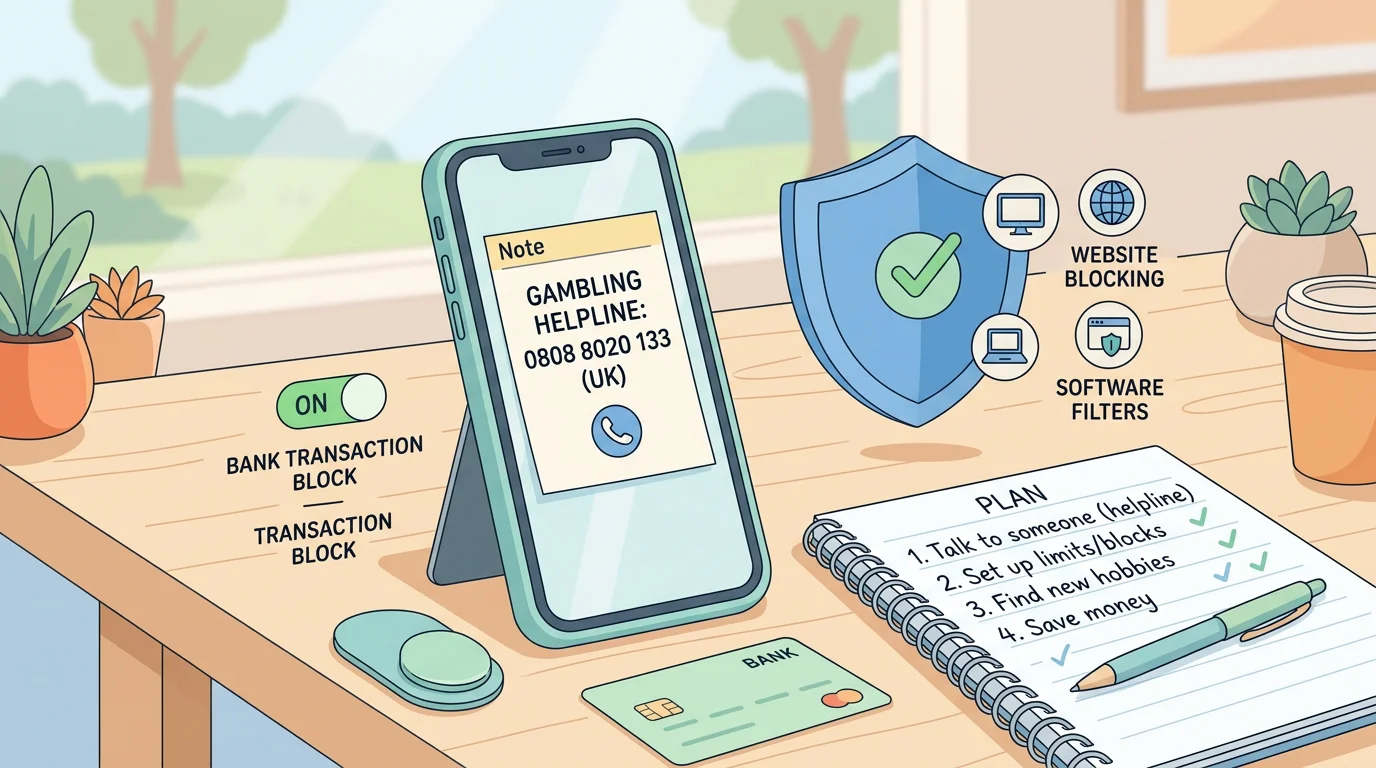
Device-level and third-party tools work independently of any operator. GamCare's National Gambling Helpline runs 24/7 on 0808 8020 133 for anyone in the UK, including players at offshore sites. BeGambleAware offers educational resources and a live chat channel. BetBlocker is a free device-level app that blocks all gambling domains — offshore included — on any device for as long as you set. Gamban does the same on a paid subscription. None of these care about which licence the operator holds; all of them work against non-GamStop sites the same way they work against UKGC ones.
The uncomfortable truth for the offshore segment: the same absence of friction that makes payouts fast makes escalation easy. There is no affordability check to catch a session that has moved past the recreational budget. No pre-set stake cap to slow a run of chasing losses. The tools have to come from the player. If they have not been set in advance, they usually are not set at all.
Support for problem gambling is not tied to which sites you play at. GamCare, GambleAware and Gamblers Anonymous UK all treat non-GamStop casino use the same way they treat any other. If gambling has stopped being entertainment and started being something else, they help before it costs more than money.
Can I play at a non-GamStop casino while my GamStop exclusion is active?
Technically yes, because offshore operators are not connected to the GamStop database and cannot detect your active UK exclusion. Doing so is a warning sign that the underlying reason for the exclusion has not been addressed. Support is available through GamCare's 24/7 helpline on 0808 8020 133 without judgment.
Final Word Before You Sign Up
British casinos not on GamStop in 2026 are a real, functional part of the online gambling market, not a shadow tier. The 40% Remote Gaming Duty and £5 slot cap have pushed a specific slice of the UK recreational player base offshore, and the reputable end of the segment — GoldenBet, MyStake, DonBet, FreshBet — actually pays, actually delivers 96%+ RTP libraries, and actually clears withdrawals inside an hour on crypto.
That does not make the segment safe by UKGC standards. UK consumer protections do not apply. Affordability checks do not run. Dispute resolution is slower and harder. For a disciplined recreational player working within a set budget, non-GamStop can be a rational choice. For someone using it to bypass a self-exclusion or chase losses beyond a recreational stake, the same features that make it convenient make it dangerous.
Choose a site with a traceable licence, published bonus terms, and a payout track record. Set your own deposit limit at registration. Use BetBlocker or Gamban if there is any doubt at all about self-control. And read every bonus term before accepting it — the wagering, not the headline, is what actually costs you.